
Impact and Role of Antenna Cover on 5G Signal Propagation
Hello everyone, I'm a salesperson from Hetai company. Today, I want to talk to you about the impact and role of antenna covers on 5G signal propagation. As the latest generation of signal technology, 5G can make our internet speed faster, but at the same time, we also need to seek the most stable effect. The higher frequency band and shorter wavelength of 5G signals make them more susceptible to external interference during transmission, causing network problems. Therefore, more sophisticated antenna systems are needed for signal transmission and reception, and using an antenna cover becomes an essential component.
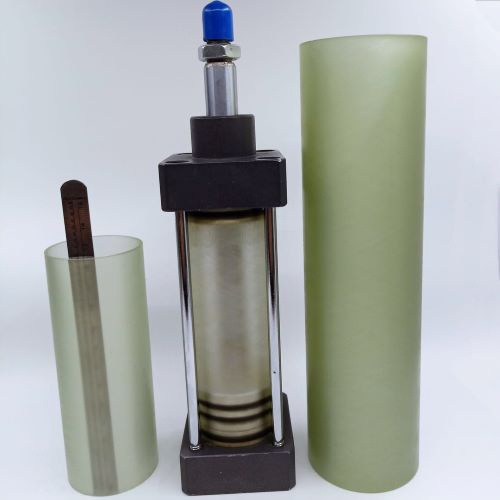
What is an antenna cover?
An antenna cover is a protective device made of special materials. Its main function is to provide wind, rain, and UV protection. It can improve antenna matching and enhance signal directivity. It plays a crucial role in improving the quality of 5G signals.
What materials are used to make antenna covers?
Antenna covers are generally made of sturdy and high-strength materials such as ceramics and fiberglass. Epoxy glass is a commonly used polymer composite material with many advantages and characteristics. It is a very strong yet lightweight and corrosion-resistant material that is used in various industries, such as artificial rain shells and antenna covers.
Conclusion:
Epoxy fiberglass, as a special material for polymer composites, plays a crucial role in improving the stability of 5G signals. However, if a poorly designed antenna cover is used, it may greatly affect the transmission and communication quality of 5G signals. Therefore, when purchasing 5G antenna covers, it is essential to choose the right one to ensure the signal stability of 5G antennas.